Equality of the sexes

School is a place where young people come to learn, not only about academic subjects but also about social structures and cultures other than their own. Within New Zealand schools a vast array of people from different ethnicities, social backgrounds and personal identities interact and are encouraged to collaborate and explore each other’s values and ways of living (Rhamie et al, 2012). The adolescent years are very influential in each learner forming their own identity and exploring social acceptance. One critical part of this developing identity is gender association and sexual orientation (Pearson, 2017).

Throughout history, several roles, both within the home and in industry, have been labelled as male or female, resulting in a distorted perception of a differences in the abilities of males and females. Teachers, as influencers of young people, should be conscious of their own perceptions of gender and sexual identity and endeavour to avoid making assumptions of gender roles or defaulting to heteronormativity. It is important for the teacher to be aware of, and in control of their own hidden curriculum in order to avoid imposing their opinions of gender and sexuality onto the students (Epstein & Sears, 1999).

The inequality between sexes was investigated during a social experiment conducted by Real Families (2018). The study worked with a class of primary school students to investigate some of the reasons why the equality gap between males and females is still so prevalent in our society, even in people as young as 7 years old. It was found that whilst most parents and teachers felt that both male and female students had equal opportunities and believed that they treated both genders with equality, there were some obvious differences. An example of these differences included the type of toys provided to children of different genders. Boys were provided with toys that encouraged them to work on their motor skills and exercised their spatial awareness, whereas girls were provided with toys that encouraged them to be nurturing and creative. While this difference may seem harmless and insignificant to a parent or teacher, the study found that as a result of this, trends show that girls were less able to solve physical puzzles while boys were less able to verbalise their emotions and show empathy.

The inequality in encouraging different sexes to practise different skills is predicted to have a significant impact on the child late in life. For example, those whose motor and problem solving skills have been well rehearsed will be more likely to succeed at jobs such as engineering, awarding that child a greater advantage over a child who was not encouraged to practise these same skills. Furthermore, the study stated that there is no difference in brain structure between boys and girls, showing that trends which favour one sex over the other was due to environmental stimulation and not due to genetic advantage of one sex over the other (Real Families, 2018).

This study highlighted the importance of gender equality in the classroom and made me think deeper about the seemingly insignificant differences in the treatment of boys and girls. Equality between sexes at school age is critical as the skills learnt in the classroom prepare the student for their future and it is up to the teacher to ensure that we prepare both boys and girls for equal success.

References

Epstein, D. & Sears, J. T. (1999) A Dangerous Knowing. Sexuality, pedagogy and popular culture. Retrieved from https://books.google.co.nz/books?hl=en&lr=&id=3d_TAwAAQBAJ&oi=fnd&pg=PP1&dq=gender+and+sexuality+education&ots=56axUIhJlp&sig=AMygRCIwgz9IcL4BIk-2emQcV00#v=onepage&q=gender%20and%20sexuality%20education&f=false

Pearson, J. (2017). High School Context, Heterosexual Script, and Young Women`s Sexual Development. Journal of Youth and Adolescence. 47, 1469-1485. http://doi.org/1

Real Families. (2018). A Gender Neutral Education. No More Boys & Girls. Can Our Kids Go Gender Free? Retrieved from https://www.youtube.com/watch?v=3Y4lgKnmWSk

Rhamie, J., Bhopal, K., Bhatti, G. (2012). Stick to your own kind: Pupils Experiences of Identity and Diversity in Secondary School. British Journal of Educational Studies. 60(2), 171-191.
Food for Thought

In my previous blogs I have spoken extensively on the inequalities of students from low and high socio-economic statuses. In my blog “Equality doesn’t always mean equal” I stated that those from low socio-economic areas tend to have many more challenges to overcome than those from wealthy families.

One of these challenges’ manifests at lunchtime. In a 3New story by Tristram Clayton (2012), the lunches of two classes of junior students at two different schools were compared. The first school was a decile 10, suggesting that majority of students were from high socio-economic families. All students in the class had some form of lunch, most of those lunches were healthy, nutritious and contained fruit. The same experiment was conducted in a classroom at a decile 1 school, where majority of the students are from low socio-economic families. In sobering contrast to the decile 10 school, only 14 of the 27 students in the class had lunch. Majority of those lunches were greatly lacking in nutrition and contained sugary foods such as biscuits and not one of the lunches from this school contained any fruit.

Watch the news article here: https://www.newshub.co.nz/home/shows/2017/05/lunchbox-differences-in-decile-1-and-decile-10-schools.html

During university, I majored in chemistry and genetics, one fact learnt in a biochemistry class has always stuck with me: The brain cannot store fuel! The body and brain are fuelled mainly by glucose. Glucose in the food we eat is then converted to energy during cellular respiration. The brain consumes on average around 120g of glucose per day (approx. 60% of the glucose intake based on an intake of 1760kJ). As the brain cannot store glucose, it requires a constant supply. The brain receives glucose from the bodies store via a glucose transporter. In order to provide optimal conditions for the brain, the body must consume enough nutrients to support its function (Berg, Tymoczko & Stryer. 2002).

Let’s neglect for a moment the phycological effects of being hungry. A child who receives inadequate nutrition during the day is essentially trying to learn on a starving brain! The levels of glucose in the brain directly affects the production of neurochemicals that assist with the creation of long-term memory and attention span. Therefore, a hungry child, or one receiving inadequate nutrition, is at a great biological disadvantage for academic success. A starving brain is also less effective at producing chemicals such as serotonin, dopamine and epinephrine. The long-term effects of depletion in these chemicals may lead to mental health issues such as depression and anxiety.

Now, looking at the phycological effects of being hungry, we have all experienced the sensation of hunger to some degree. Many of us will be aware that the feeling of hunger can have a great effect on a person’s ability to regulate their emotions. The loss of temper or irritability caused by an empty stomach is so universal that it was even given its own name, “hangry!” The ability to control ones mood, despite the feeling of hunger, requires an emotional maturity that is out of reach to most adults, so it goes without saying that a hungry child may experience the type of emotional turmoil that may result in what the child’s teacher will call a behavioural or social issue.

To learn more about how food effects your brain, check out this short video: https://www.youtube.com/watch?v=xyQY8a-ng6g

References

Berg JM, Tymoczko JL, Stryer L. Biochemistry. 5th edition. New York: W H Freeman; 2002. Section 30.2, Each Organ Has a Unique Metabolic Profile. Available from: https://www.ncbi.nlm.nih.gov/books/NBK22436/

Clayton, T. (2012). Lunchbox differences in decile and and decile 10 schools. NewsHub. Retrieved from https://www.newshub.co.nz/home/shows/2017/05/lunchbox-differences-in-decile-1-and-decile-10-schools.html

Nacamulli, M. (2016). How the food you eat effects your brain. Retrieved from https://www.youtube.com/watch?v=xyQY8a-ng6g

The Decile System

What is the Aim of the Decile System?

The decile system is a scoring system used by the Ministry of Education to determine the financial needs of public schools. Each school is assigned a rating between one and ten depending on the percentage of enrolled students from low socio-economic backgrounds. A higher score indicates less students from low socio-economic backgrounds and the school is allocated less funding (Education, 2019).

The decile system was implemented in 1995 with the purpose of distributing government funding in a way which helps to provide extra support to learners from disadvantaged communities. The system aims to give extra support to those who are disadvantaged in order to provide equal opportunities for the success of all students (PPTA, 2013). However, the decile system is commonly misinterpreted as being a reflection of a difference in the quality of the education provided at different schools. Parents often avoid sending their children to lower decile schools in favour for a higher decile, as they believe their child will have better academic success at a higher decile school.

Is Decile Score Synonymous with Quality?

When comparing the average NCEA grades achieved at schools of different decile rates, it is evident that lower decile schools achieve, on average, lower grades than higher deciles schools. However, according to Thrupp and Alcorn (2011) comparing school achievement in a decile-based context is “a case of using available data rather than good data.”

Children from low socio-economic communities face many more obstacles on the road to academic success than children from more privileged backgrounds. As low decile schools have a higher percentage of disadvantaged children than their high decile counterparts, directly comparing the average NCEA results of these schools is to neglect the inequality of preparedness between children of high and low socio-economic status. In order to fairly compare the quality of education provided by each school, one must also take into account the starting position of the students within the school. To compare academic success based on the end point of the child’s education alone would be a gross misrepresentation of the obstacles each child has had to overcome in order to arrive at the destination.

Also, as there is no difference in the level of qualification needed to teach at schools of different decile levels, both high and low decile schools draw their teaching staff from the same pool. This suggests that there is no difference in the quality of teaching between schools of different decile levels (ERO, 2016).

While on the surface it may appear that the decile rate of a school corresponds to student success, this is not a true reflection of the quality of education provided by the school. Therefore, comparing the average NCEA results between school does not fairly represent the quality of teaching or the success of the schools ability to teach the child, instead this difference in achievement highlights the importance of providing additional support to disadvantaged children, as is the aim of the decile system (PPTA, 2013).

References

Education. (2019). School Deciles. Retrieved from https://www.education.govt.nz/school/funding-and-financials/resourcing/operational-funding/school-decile-ratings/

Education Review Office. (2016). High Quality Education and Care – An Overview. Retrieved from https://www.ero.govt.nz/publications/quality-in-early-childhood-services/high-quality-education-and-care-an-overview/

PPTA. (2013). A Hierarchy of Inequality – The Decile Divide. NZPPTA. Document 338. Retrieved from https://www.ppta.org.nz/dmsdocument/338

Thrupp, M., & Alcorn, N. (2011). A Little Knowledge Being a Dangerous Thing?: Decile-based Approaches to Developing NCEA League Tables. New Zealand Annual Review of Education. 20(2010), 52-73. Retrieved from https://www.victoria.ac.nz/education/research/nzaroe/issues-index/2010/pdf/text_thrupp.pdf

A Sceptic in the Innovative Learning Space.

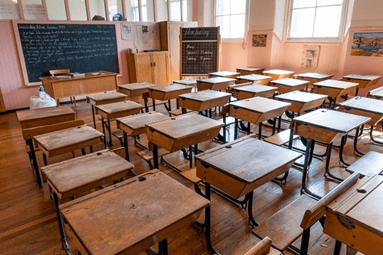
Innovative classrooms are becoming more and more popular in schools, but what does this term really mean? Perhaps, it is easier to explain what an innovative classroom is not! If your image of a classroom is rows and rows of single desks all facing the same direction, with a teacher podium at the front of the room, you are not picturing an innovative classroom! The innovative classroom has no template to follow, it can be anything you like.

Innovative classrooms are becoming more and more popular in schools, but what does this term really mean? Perhaps, it is easier to explain what an innovative classroom is not! If your image of a classroom is rows and rows of single desks all facing the same direction, with a teacher podium at the front of the room, you are not picturing an innovative classroom! The innovative classroom has no template to follow, it can be anything you like.

For me, the first experience of an innovative classroom was walking into my practicum school, I was presented with a colourful room filled with clusters of tables: Some low to the ground with soft chairs, some tall, café style tables with high stools, some tables were more like a traditional 4 seaters and some allowed students to sit in pairs. Students were free to sit wherever they wanted, they could choose to sit in large groups or alone. Not only could they sit wherever they wanted, but it appeared they were also free to move and rearrange the furniture however they wanted. The next thing I noticed was that there was no teachers desk or obvious place in the room for the teacher to be based. Large whiteboards took up 3 walls and the 4th wall was not a wall at all, but a row of foldaway dividers hanging from the ceiling that could be hidden away to allow two small classrooms to be transformed into one large room.

Had I seen this room in any other context I would have thought it looked exciting, vibrant and inviting. However, to my surprise, the first thought that popped into my head was “Oh no! How am I meant to get the students attention when they are all sitting in large groups facing each other?” I had images in my mind of student arguing over the “coolest” seats or bickering about who is going to sit with who. My initial instinct was to be nervous about how the set out of the room would hinder the effectiveness of my teaching. Would it be impossible to get everyone’s attention when no matter where I placed myself in the room, some of the students would have their backs to me?

As I began to observe my first class, I noticed that many of the issues I feared were unfounded. Students came into the room just like in any other, they took their seats and quickly reshuffled chairs to fit their needs. As the teacher based himself in front of one of the whiteboards and began addressing the class, the students simply swivelled in their chairs to face the direction he was addressing them from. The teacher walked about the classroom introducing different tasks as students swivelled and readjusted their position to keep their eyes on him, it felt almost like watching a strange, slow motion game of tennis.

I realised that this type of seating arrangement had some benefits. Students were unable to sit at the back of the class hoping to go unnoticed as the room had no front and no back. This encouraged the teacher to rotate around the room and spend time with all students, or place himself near some distracted students to help keep them on task without disrupting the rest of the class. As the lesson continued, I noticed that some students would take the initiative to move seats, maybe to get a better look of the whiteboard, move away from an unwanted distraction, or move into a more comfortable position. This allowed students the freedom to manage themselves and encouraged them to use their initiative. Overall, I noticed that the students seemed happy and relaxed in the room and appeared to have a positive association with the space.

The setup, however, was not without its flaws. Allowing students to sit in large groups sometime meant that individuals would hide in the crowd, sitting back at letting other students do the work rather than actively contributing. This required the teacher to monitor groups and sometimes split up a large group into smaller clusters. It also meant that students tended to gravitate towards their friends and would work with the same group of students each day. This also required the teacher to be creative in some tasks, ensuring that students had the experience of working with others.

All in all, my opinion of an innovative learning space went from one that was very sceptical, to seeing first-hand some of the benefits it provides.

Ethnic Diversity vs Expectation in NZ schools

Auckland prises itself on being New Zealand`s most culturally diverse city. There are people of over 100 different ethnicities that call Auckland home, and more than 150 languages are spoken here every day (ERO, 2018). It goes without saying then, that Auckland schools are also the most culturally diverse. A 2017 report from Education Review Office stated that the school roll in Auckland is composed of 15.6 percent Māori, 20.0 percent Pacific, 21.1 percent Asian, 37.0 percent New Zealand European and 3.7 percent Other.

The Education Review Office stated that diversity has the possibility to “create positive interactions that stimulate the creativity of students.” The report commented on how cultural diversity in schools helps to eliminate the tendency for students to pre-judge or identify people based on their ethnicity (ERO, 2018). But, can the same be said for the teachers?

Teacher expectations can have a lasting effect on the student. A high expectation may serve to encourage and motivate students, whereas placing low expectations on students may serve to demotivate and inflict low self-confidence. A study conducted by Turner et al (2015), found that teachers placed lower and more negative expectations on indigenous and minority students. This negative expectation was reflected in the secondary school achievement statistics which show that indigenous and minority student perform at lower levels than European and Asian students (Turner et al, 2015).

Student-teacher relationships were discussed by Turner et al (2015). It was found that Maori and Pasifika students suffered from poor student-teacher relationships and were less likely to relate to the teacher`s pedagogy. One striking fact stated that at the beginning of the school year, results showed that Maori literacy levels were similar to that of all over ethnic groups. However, by the end of the school year Maori literacy tested much lower when compared to European students. This statistic may provide evidence that negative expectations placed on Maori student by the teachers has contributed to the achievement gap.

A series of interviews conducted with teachers at an Auckland school revealed that there was a lack of ownership by the teachers when it came to the achievement gap. On discussing the academic achievement differences between Maori and European students, it was stated by many teachers that Maori home-life was a detrimental factor in their education. It was assumed that Maori parents were poorly educated and showed a lack of interest in their child`s education. These statements were not backed up by fact, showing a negative perception of Maori and lack of ownership for the success of Maori achievement by the teacher.

I feel that in a city that prises itself on being culturally diverse, these negative perceptions of indigenous students represent gross stereotyping and shows a lack of cultural understanding by many teachers. When we consider that 15.6 percent of students are of Maori decent and 20 percent are of Pacific decent, it is alarming to think that teachers may have low expectations of a combined 35.6 percent of all students in their classroom. A lesson that I took from this and hope to implement in my teaching practice, is to be consciously unbiased in respect of my expectations for the academic ability of my student, regardless of ethnicity.

References

Education Review Office. (2018). Ethnic Diversity in New Zealand State Schools. Retrieved from https://www.ero.govt.nz/footer-upper/news/ero-insights-term-1/ethnic-diversity-in-new-zealand-state-schools/

H, Turner., C. M, Rubie-Davies., M, Webber. (2015). Teacher Expectations, Ethnicity and the Achievement Gap. New Zealand Journal of Educational Studies. 50(1), 55-69. https://doi-org.ezproxy.aut.ac.nz/10.1007/s40841-015-0004-1

Equality doesn’t always mean equal.

As a student teacher one fact is laid out to us right from the start of our training: Maori underachievement is an issue in New Zealand schools. According to Education Counts (2019), only 66.5% of Maori school leavers achieved level 2 NCEA, and only 33.8% achieved level 3 NCEA in 2016. For many of us this is a concerning statistic and begs the questions: what can we, the future teachers of New Zealand, do to help improve Maori achievement in schools?

One issue outlined by Harker and Nash (1990) takes into consideration cultural capital inequality. Cultural capital refers to the knowledge, social inclinations and skills inherited from the culture in which you are raised. Harker and Nash (1990) claim that schools have the tendency to treat all students as if they have access to the same cultural capital that is possessed by the majority. This severs to provide advantage to the majority and disadvantaging to minority groups who do not have access to the same cultural capital.

For most teachers I feel that providing a pedagogy which causes disadvantage to cultural minorities is not a wilful act, but possibly due to the notion that the teacher feels they need to treat all students the same. While this likely comes from a place of good intention, I strongly feel that it is a common misconception that in order to provide equal learning opportunities for all students, all student should be treated equally. This neglects the advantage gained by some due to the fact that their cultural capital better prepares them for an education system that caters to the majority. I feel that providing equal opportunity for all students is not synonymous with treating all student the same and the needs and experiences of each individual should be taken into consideration. I feel that the teacher should strive to catered to the needs of each student to the best of their abilities, appreciating that for some students this may mean providing more assistance than what is needed by others in order to attain the same degree of achievement.

However, as a student teacher this leads me to thinking: by making allowances for some students, am I unwittingly buying into the deficit model? Where is the line to be drawn between differentiating my teaching to suit the cultural capital of minority students, and assuming a different standard for these students based on perceived weakness. Personally, I feel the difference comes into play in expecting the same standard for minority students, whilst also appreciating that they may need extra assistance in getting there.

Reference

Education Counts (2019). Quick Stats about Maori Education. Retrieved from https://www.educationcounts.govt.nz/topics/31351/nga-haeata-matauranga-annual-report-on-maori-education/7.-quick-stats-about-maori-education

Harker, R.K. (1990). Schooling and cultural reproduction In J. Codd, R. Harker & R. Nash (Eds.), Political issues in New Zealand education (pp.25-42). Palmerston North: Dunmore Press. fffff